How to teach number tracing by age, one number a night
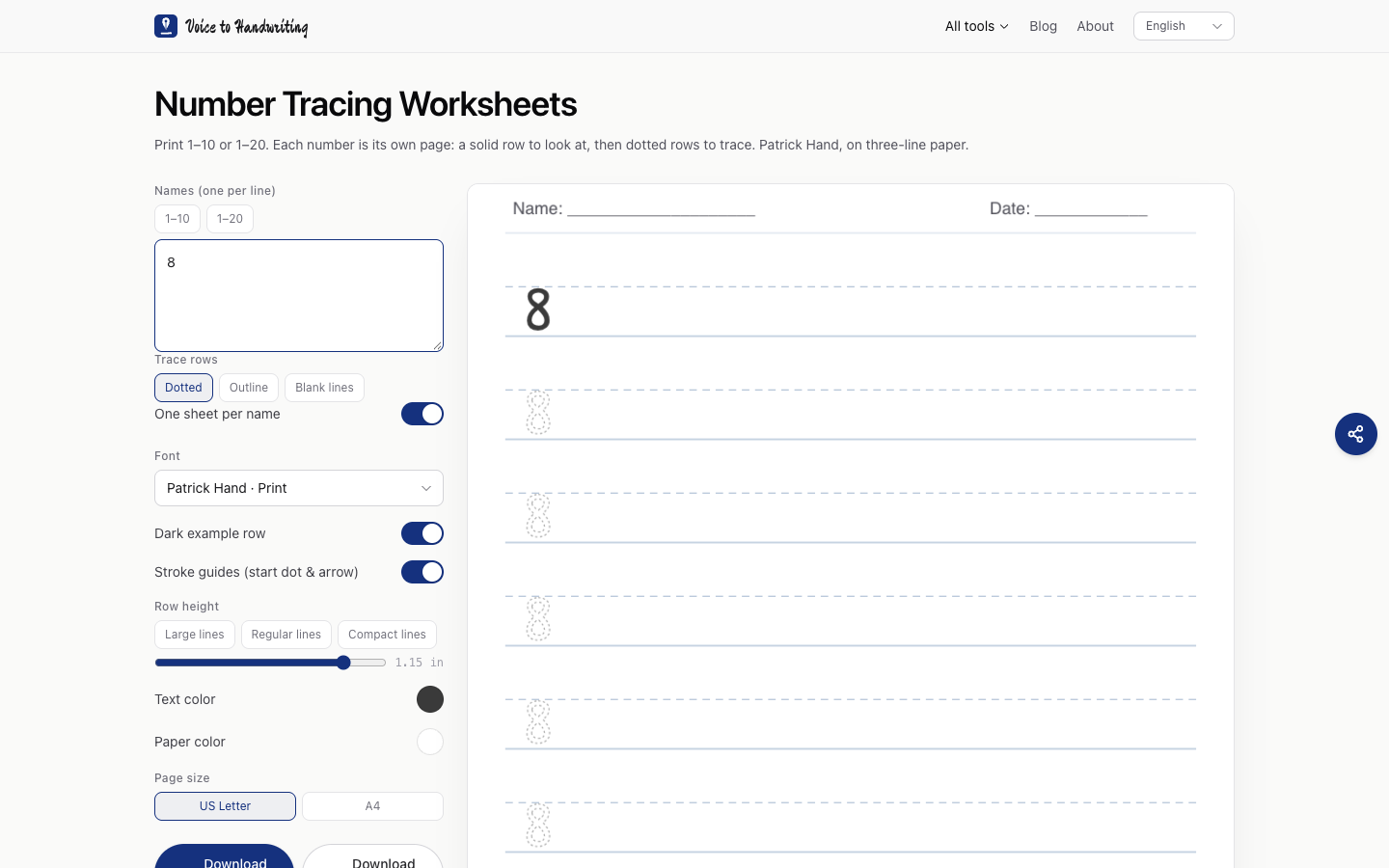
Tuesday homework at our table is one numeral, a pencil, and the page that repeats it. Maya is 6. Last week she could say "eight" and still start the pencil in the middle of the loop. The number tracing worksheets print 8 on its own page: a solid row in Patrick Hand, then dotted rows on the three lines. That is the whole job for one sitting.
What to print, by age
| Age | At the table | On the sheet |
|---|---|---|
| 3–4 | The child is still aiming the pencil. Stay on lines and circles. | Prewriting strokes, lines first. Numbers can wait. |
| 5–6 | One numeral a night. Say the name, trace the solid row with a finger, then the dots. | 1–10. Leave 6, 8, and 9 for later in the week if the loops fight. |
| 7+ | Cover the model after two dotted rows. Copy the numeral on lined paper. | 1–20 when the teens are the ones that come out backwards. |
A numeral is the written mark. How many crackers are on the plate is a different lesson. This sheet repeats the mark.
Tomorrow morning
- Open the sheet and leave it on 1–10.
- Pick the number from last night's homework. Each number is already its own page, so the first row stays solid and the rows under it are dotted.
- Finger-trace the solid row once. Pencil on the dots, three times. Stop while the child still wants another turn.
- If the pencil grip turns into a fist, put the sheet away and do the down-stroke on the prewriting page instead.
When the child pushes the page away
Shorten the job. One row is enough. Swap the pencil for a crayon on the same dots. If 8 is the fight, do 1, which they already own, then come back to 8 tomorrow. The page will still be there.
The sheet is free, with no account. It keeps the writing on the page. Counting stays a conversation at the table.